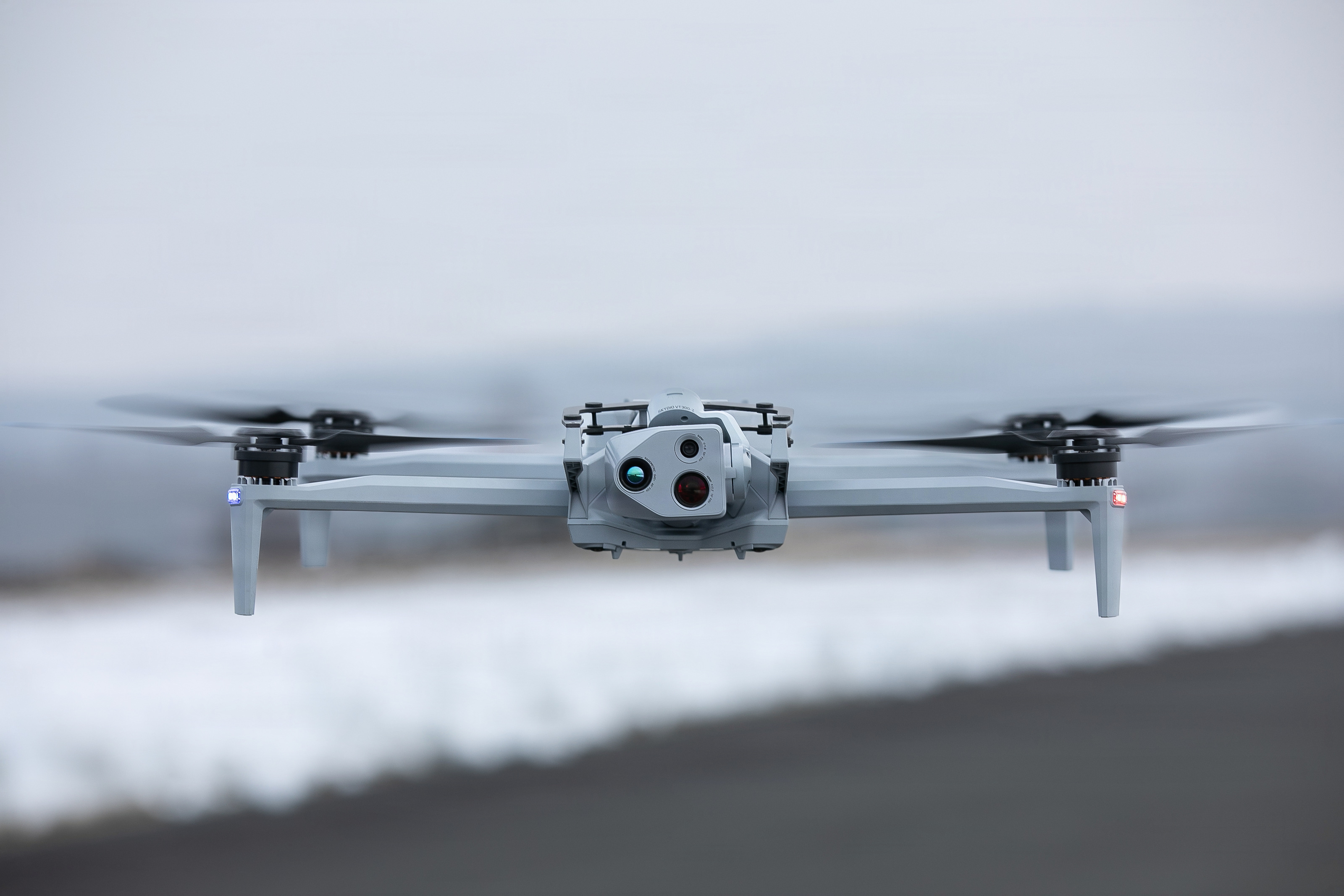
Passive bistatic radar that detects autonomous, RF-silent drones using commercial broadcast signals. Zero emissions. Full 360° coverage. Invisible to the threat.
Vision-guided autonomous drones generate zero RF emissions during flight. They cannot be detected by RF sensors, cannot be jammed, and navigate using onboard cameras and pre-loaded imagery. Against such threats, current detection systems are effectively blind.
Phantom Array exploits existing commercial broadcast signals—FM radio, digital television, and cellular networks—to detect drones without emitting any radar signature.
The receiver generates zero RF emissions. Invisible to adversary detection, immune to anti-radiation targeting.
VORTEX technology achieves omnidirectional detection using directional cellular infrastructure.
Simultaneous exploitation of FM, DVB-T, LTE, and 5G NR signals for robust detection across conditions.
Neuromorphic processing distinguishes drone micro-Doppler signatures from birds and clutter at extreme efficiency.
From forward operating bases to commercial airports, Phantom Array delivers persistent drone detection where it matters most.
Runway protection and terminal airspace security without interfering with ATC radar
Large event protection for concerts, sports, and public gatherings
Wide-area surveillance for smuggling interdiction and territorial monitoring
Power plants, refineries, data centers, and utility protection
Inaugurations, summits, dignitary visits, and high-profile gatherings
Harbor approaches, anchorages, and maritime terminal security
Federal buildings, embassies, and sensitive installations
Base defense, forward operating locations, and expeditionary force protection
VORTEX solves a fundamental problem: 5G base stations form narrow beams toward active handsets, not broad coverage. Our geometric innovation turns this limitation into an advantage.
Low-power emitters surround the passive receiver
Base stations form beams toward decoys, away from receiver
Receiver captures target reflections from sidelobe illumination
Overlapping sidelobes provide 360° detection envelope
Against Group 1 fixed-wing UAS. Range varies by illuminator band and target RCS.
From first detection to declared track report. Single-band detection.
Continuous operation. Duty-cycled mode achieves 2.5–3W for extended deployment.
Drone identification accuracy at 6–8 dB SNR. Distinguishes from birds and clutter.
5G NR band resolution. FM band provides 750m; DVB-T provides 19m.
From 100Wh battery pack in duty-cycled operation mode.
Permanent deployment at airports, stadiums, power plants, and critical infrastructure. AC mains power for continuous operation.
Vehicle-mounted or backpack-portable for events, security details, and rapid response scenarios.
10–50 networked nodes with mesh coordination. Solar power with battery backup for autonomous wide-area surveillance.
Detailed performance data for acquisition teams and integration engineers.
Phantom Array was developed to address a critical capability gap: the inability to detect autonomous, vision-guided drones that emit no RF signature.
The system represents American ingenuity applied to an urgent security challenge. Privately funded. Domestically developed. Built to protect.
For program inquiries, capability briefings, or partnership discussions.
contact@phantomarray.us